Black Friday is a month now
In Belgium, retailers such as MediaMarkt and Krëfel started their Black Friday promotions on 1 November 2025, and NielsenIQ called it "a month-long shopping phenomenon". In the Netherlands, ABN AMRO found Black Friday itself flat in popularity, with buying spread across November. In Germany, the retail federation HDE expected Black Friday and Cyber Monday sales to fall slightly in 2025, the first drop since it began measuring in 2016.
Shoppers prepare too: in a Test Aankoop survey, 63% of Belgians said they research products on shop websites or in stores before the day. So the visitors you get in early November are often the buyers of late November, looking around first.
Two more numbers shape the plan. Salesforce counted 70% of Cyber Week 2025 orders worldwide as placed on a phone. And across 50 studies, Baymard Institute puts the average share of shopping carts that are abandoned at about 70%, with unexpected extra costs the most common reason.
The plan at a glance
| Week | Dates (2026) | Focus |
|---|---|---|
| 5 weeks out | 19–25 October | Decide the offer, check margins and stock |
| 4 weeks out | 26 October – 1 November | Freeze regular prices, set delivery and returns |
| 3 weeks out | 2–8 November | Build the sale, speed up the shop on a phone |
| 2 weeks out | 9–15 November | Warm up your list, start early access |
| 1 week out | 16–22 November | Test everything at checkout |
| Black Week | 23–30 November | Run it, watch it, switch for Cyber Monday |
| After | From 1 December | Thank, follow up, mind the new reference price |
5 weeks out: decide the offer (19–25 October)
Must:
- Choose what you'll offer, and to whom. A sitewide percentage is the easiest to copy and the hardest on your margin. A gift with an order, free delivery above an amount, a bundle or early access can work as well for a small shop; see Black Friday without big discounts for the sums. Write down the offer for each product group.
- Check the margin on every discounted product. Work out what you keep per order after the discount, payment fees and delivery. If a 20% discount leaves you little or nothing on a product, leave that product out.
- Order stock now. Shopify's own checklist tells shops to order stock early. Suppliers and carriers get slow in November.
Nice to have: list your ten best-selling products from last November and December. They're your likely bestsellers again.
4 weeks out: freeze prices, set delivery (26 October – 1 November)
Must:
- Stop changing regular prices. In the EU, the "was" price you show on 27 November must be the lowest price you charged in the 30 days before. That window starts on 28 October. Our article on the EU 30-day price rule explains it with a worked example, and what Shopify's compare-at price does and doesn't do for you.
- Write your delivery promise. Show delivery times on product pages and at checkout. Carriers get very busy: bpost says its parcel peak now starts around Singles' Day on 11 November, and PostNL asked webshops to spread their promotions so parcels arrive in time.
- Check your returns page. In the EU, people can cancel an online order within 14 days of delivery without giving a reason. Say how returns work in plain words; Baymard lists an unclear or unsatisfying return policy among the top reasons people abandon a checkout.
Nice to have: decide whether you'll offer longer returns for gifts bought in November, for example until mid-January.
3 weeks out: build the sale (2–8 November)
Must:
- Set up the discounts, but don't switch them on. In Shopify, discount codes and automatic discounts take a start and an end time, in your store's time zone. Up to 25 automatic discounts can be active at once. Decide whether codes may be combined with other discounts.
- Make a sale collection so shoppers can find all the offers in one place. Shopify suggests a collection with the rule "compare-at price is not empty"; check it doesn't pick up old sale prices.
- Speed up the shop on a phone. Remove apps and scripts you no longer use, and look at your product pages on a mid-range phone over mobile data.
- Go easy on pop-ups. Google advises against overlays that cover the whole page on a phone, and suggests small banners that take up only a small part of the screen. A full-screen discount pop-up on every page also hides the products people came to see; see Black Friday popups vs one question.
Nice to have: a short gift guide by budget or by person ("for someone who cooks"), linked from the home page.
2 weeks out: warm up your list (9–15 November)
Must:
- Tell your email list what's coming, without giving away the offer yet. One email this week is enough.
- Open early access. Let people sign up to get the offer a day early. It's the cheapest list-building you'll do all year, and it spreads your orders over more days. We explain the steps in how to build a Black Friday early-access list in 4 weeks.
- Check your sending setup. Shopify's checklist reminds shops to check that their email domain is set up (SPF, DKIM and DMARC), so emails don't land in spam on the busiest sending week of the year.
Nice to have: prepare the posts and emails for the whole of Black Week now, so you're not writing them at midnight.
1 week out: test everything (16–22 November)
Must:
- Place a test order with every discount, on a phone, all the way through checkout. Check the price shown, the "was" price, delivery costs and the confirmation email.
- Turn on abandoned checkout emails and send yourself one.
- Add your Christmas delivery dates to the site. Carriers publish their cut-offs in December; as a guide, DHL in Germany gave 20 December 2025 as the last drop-off for parcels to arrive by Christmas Eve. Give yourself a day or two of margin.
- Write answers to the questions you'll get most: delivery dates, sizes, returns, gift wrapping. Put them on the product pages, not only in a help page nobody opens.
Black Week: run it (23–30 November)
- Switch the offer on when you said you would, for early access first if you offered it.
- Check orders and stock twice a day. Pause the offer on a product before it sells out, not after.
- Answer questions fast. A shopper with one question about delivery or size is close to buying; a reply the next day is often too late.
- Change the offer for Cyber Monday (30 November) if you planned one, and remember the EU rule applies to it too.
After Black Friday (from 1 December)
- Take the sale off at the time you announced.
- Mind the new reference price. Your Black Friday price is now the lowest price of the last 30 days. A December sale has to use it as its "was" price.
- Send a thank-you email a few days after the order arrives, as Shopify's checklist suggests, with your Christmas delivery dates.
- Write down what worked: which offer, which products, which days. Next year's plan starts there.
Where Signal fits
Most of your Black Friday visitors won't buy on their first visit. Many come back more than once, look at the same product again, and leave without asking the one thing that stopped them.
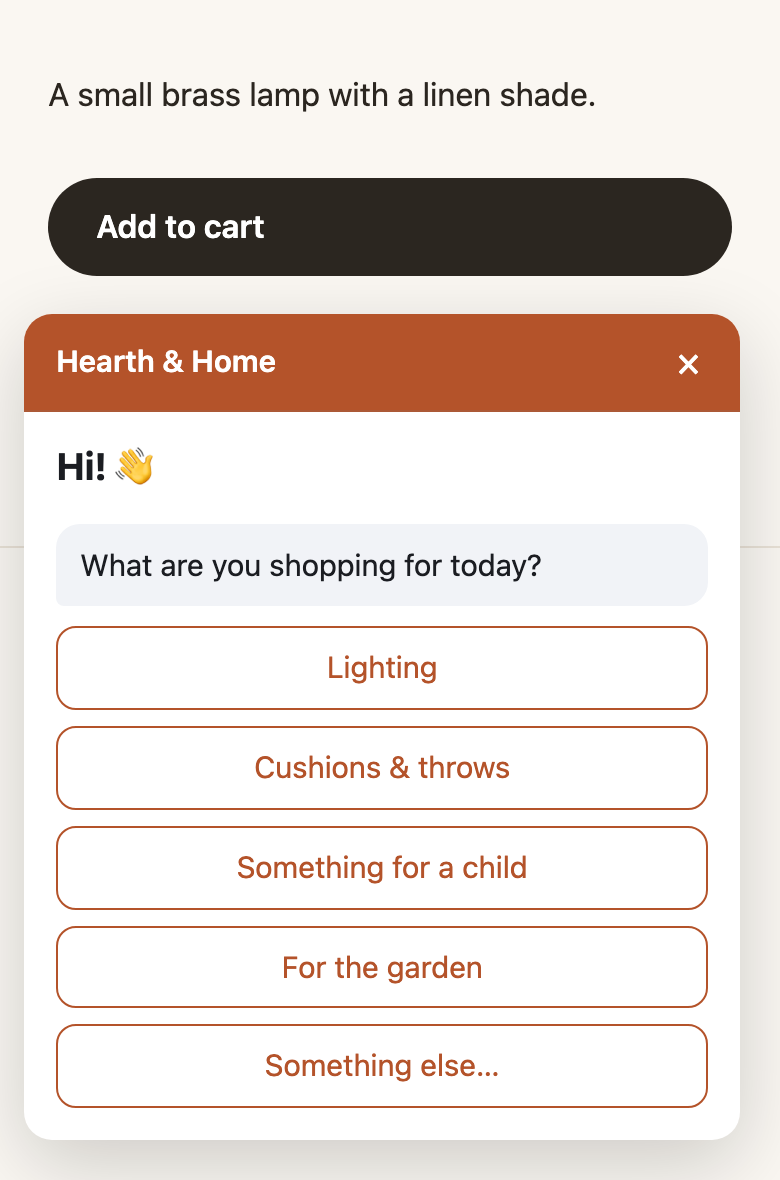
Signal notices that pattern. It can ask one short question, like "Is it a gift?" or "When do you need it by?", and show the answer, the delivery date or the offer that fits that visitor, instead of the same pop-up for everyone. It works on Shopify and on any shop that lets you add a line of code, from €39 a month. See how it works.
If you're starting late
If Black Friday is less than two weeks away, do four things: freeze your regular prices, pick one simple offer, test it at checkout on a phone, and put your delivery dates on the product pages. That covers most of what goes wrong for small shops.